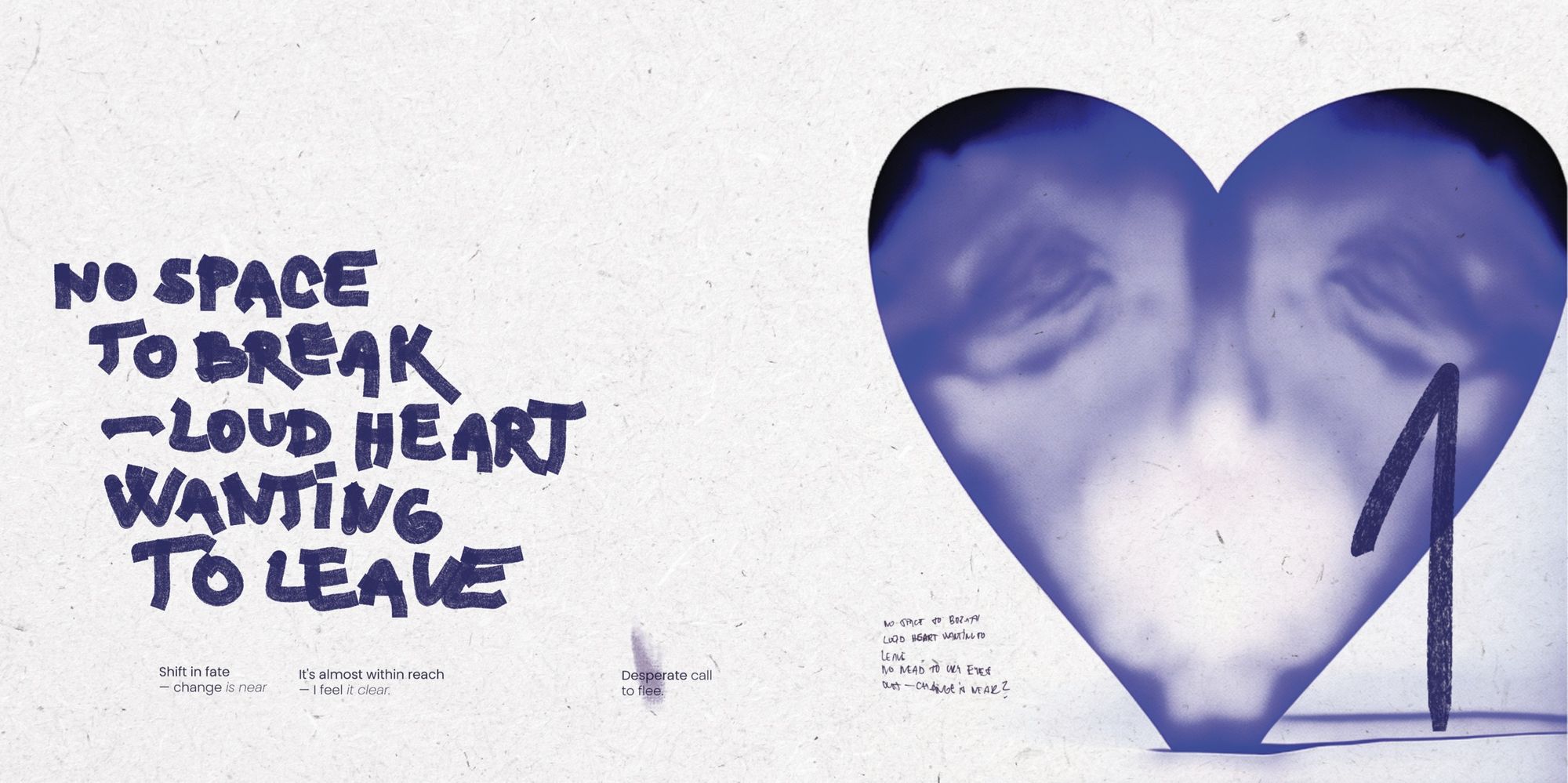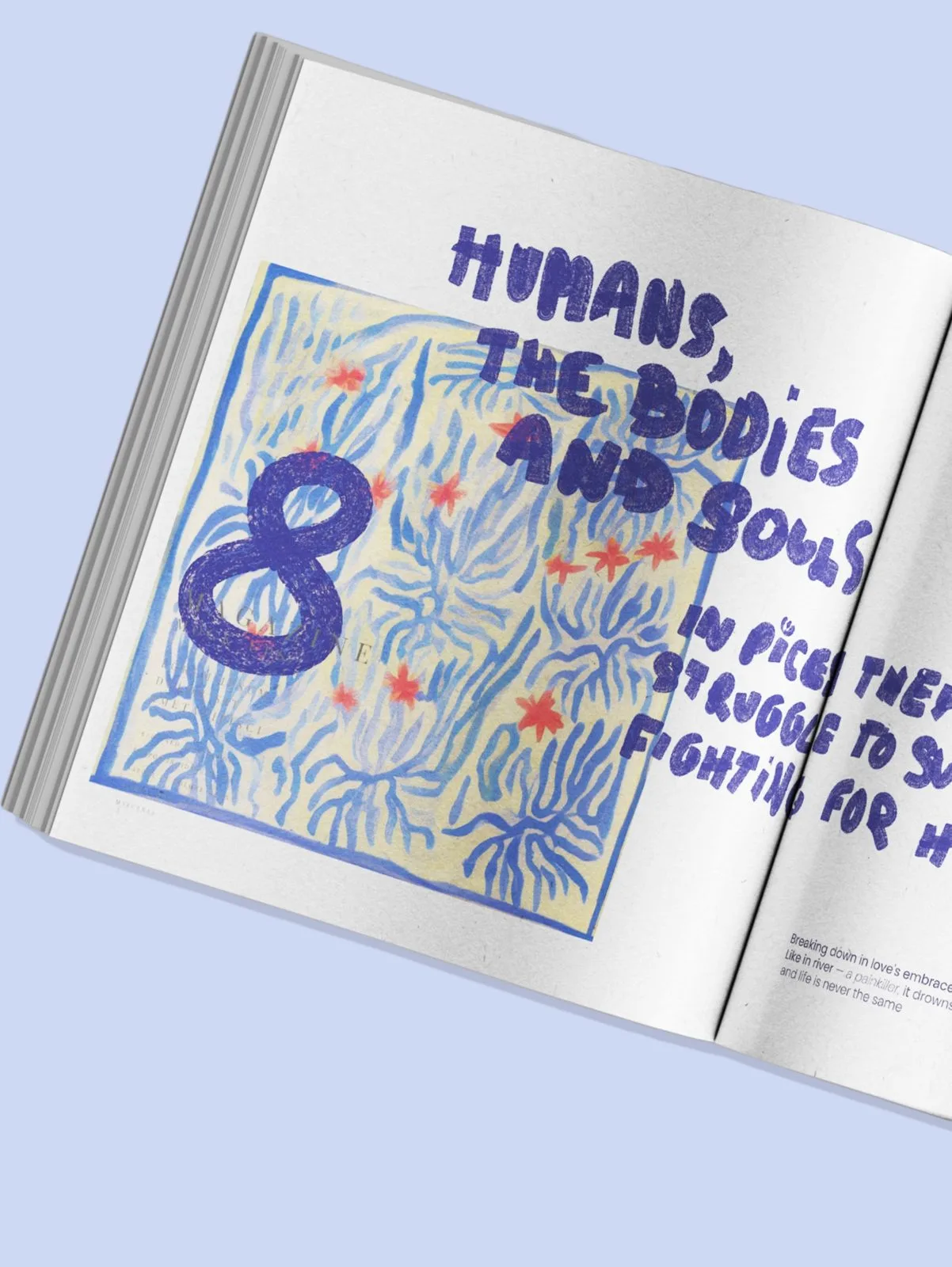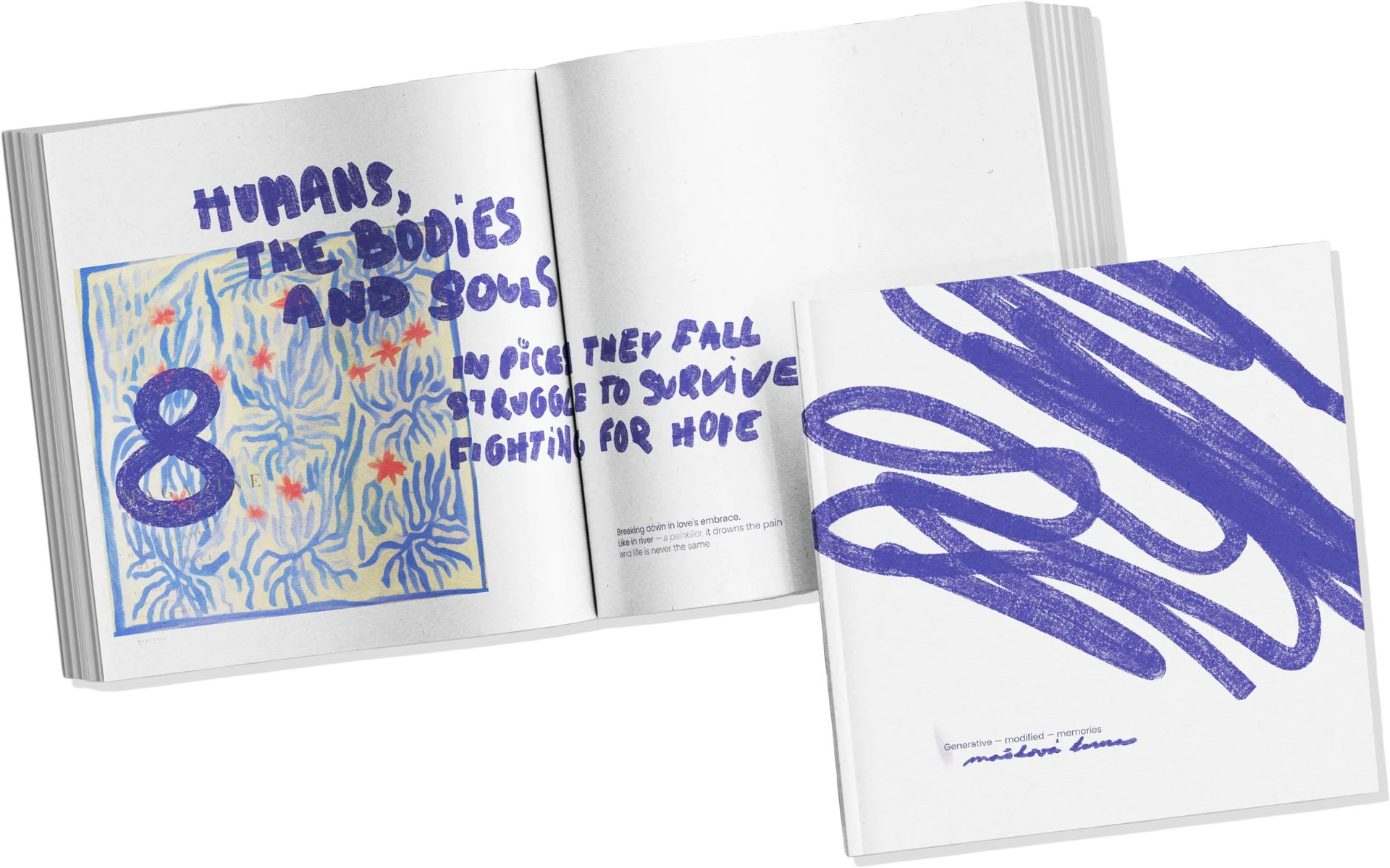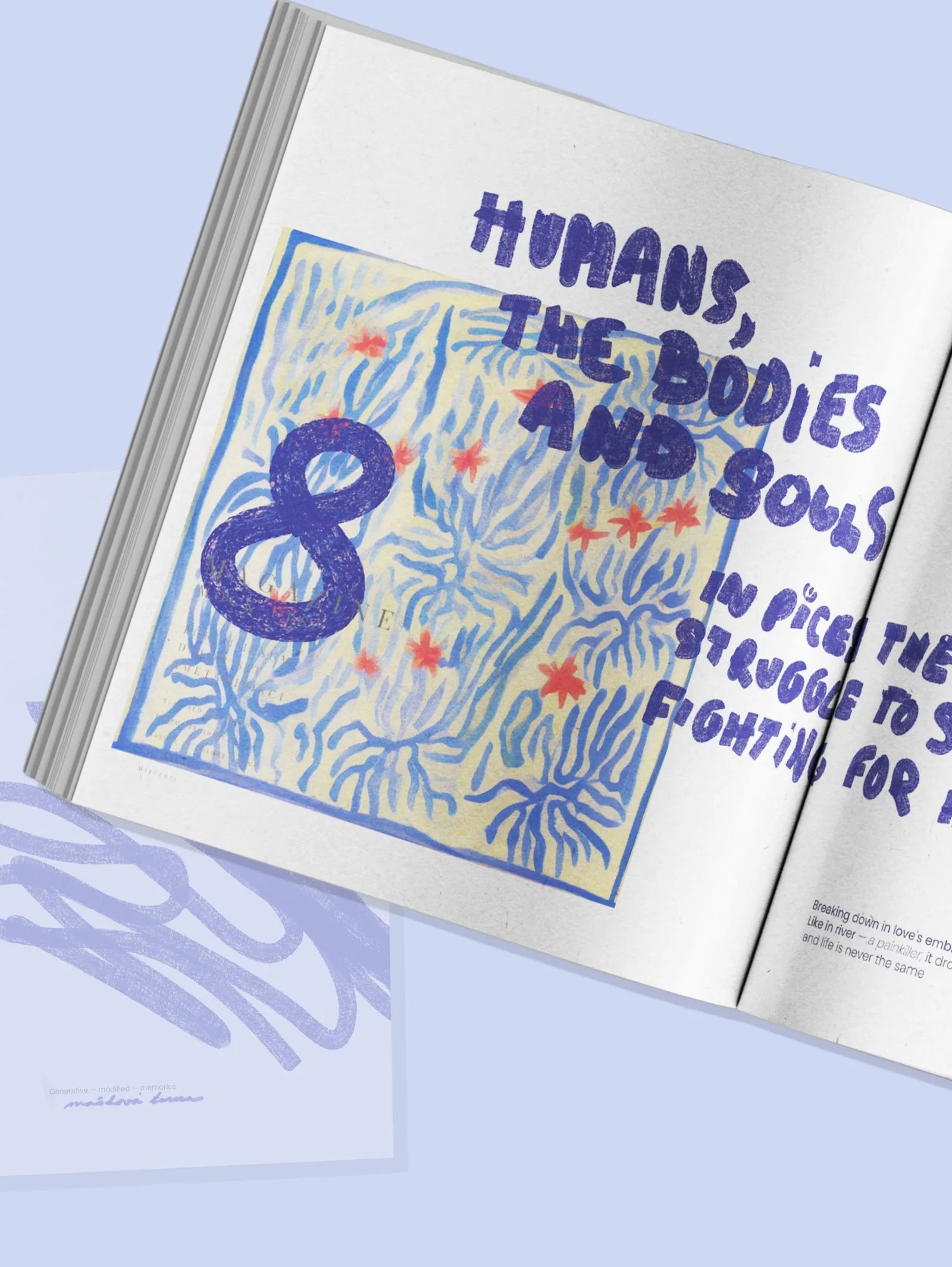
A book of my own poems, illustrated by an AI I trained on my own drawings.
The practical part of my bachelor thesis, made in 2022/23 — when public text-to-image AI was still in its infancy. Stable Diffusion had just launched, DALL-E was invite-only, and most people had never heard of a prompt. The generated images were only raw material. The concept, the poems, the curation, the typesetting and the print are what turned them into a book.
When generative AI and model training were in their infancy
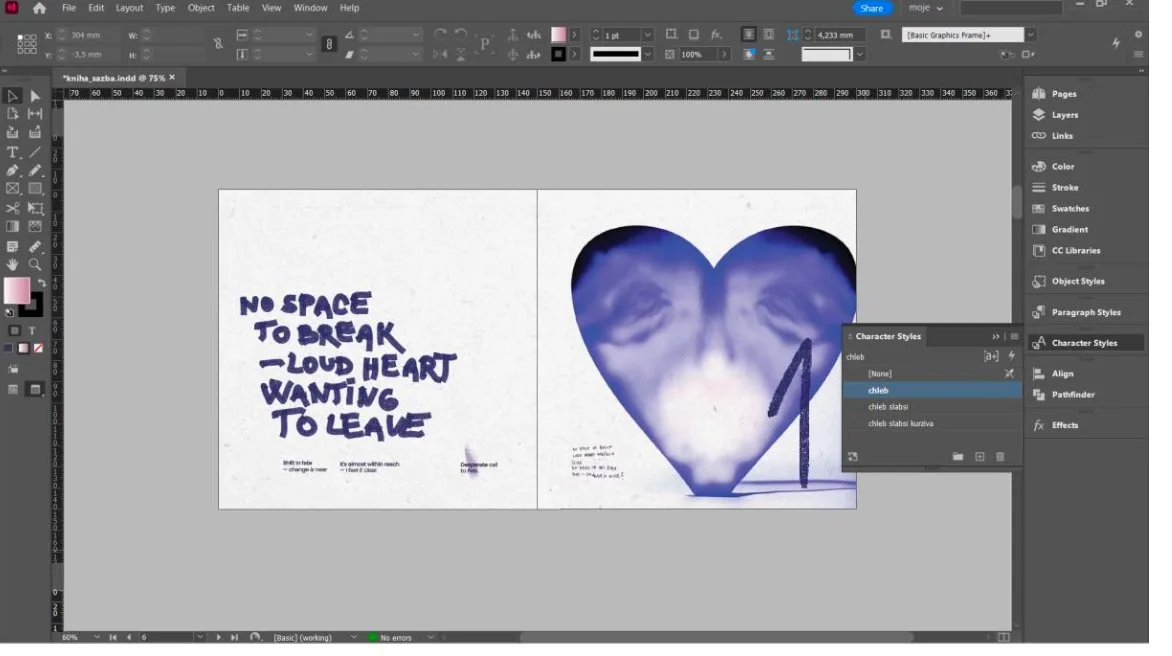
This project was realized during the dawn of open-source generative models: Stable Diffusion had just been released, and consumer fine-tuning tools did not exist. There were no LoRAs and no ControlNet. Training a model on your own personal art required experimental Google Colab notebooks, Automatic1111 scripting, and pioneering custom Hypernetworks. It was uncharted territory in graphic design education.
Concept, poems, dataset, model training, curation, typesetting, print.
Stable Diffusion, Automatic1111, Google Colab, Leonardo.ai, ChatGPT, Affinity Designer, InDesign.
Bachelor thesis, Faculty of Education, University of Hradec Králové. Supervised by MgA. Petr Hůza.
Thirteen chapters.
Turn the pages.
Click the right page to turn forward, the left page to go back — or use the arrow keys.
Chapter 01
Between a naive line
and a generative system.
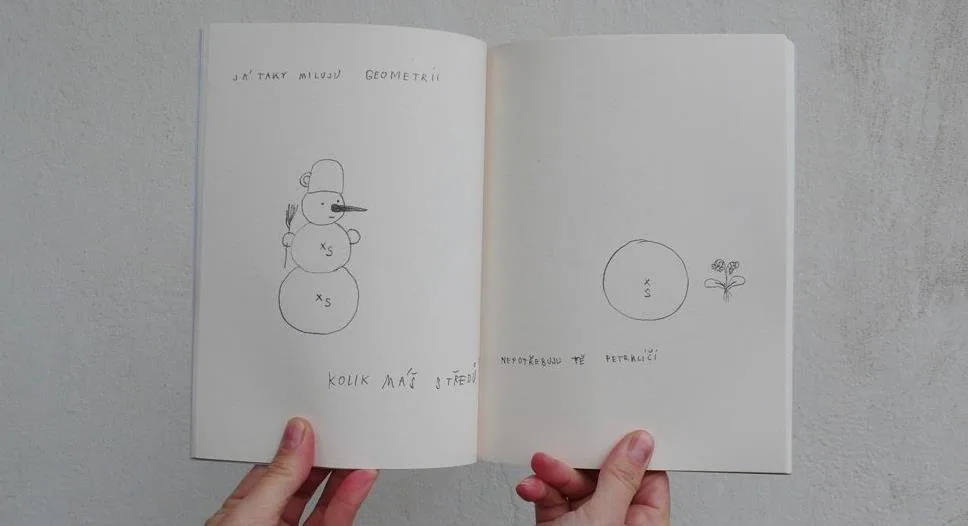
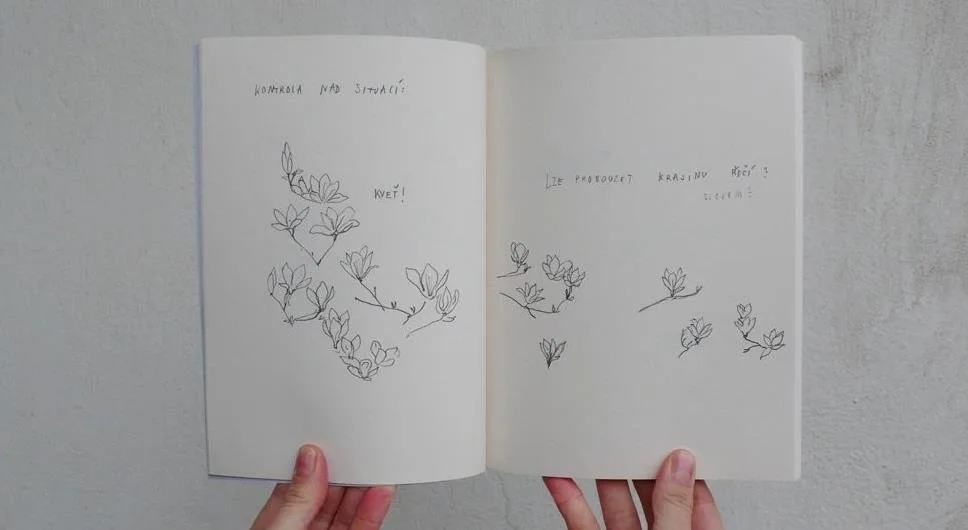
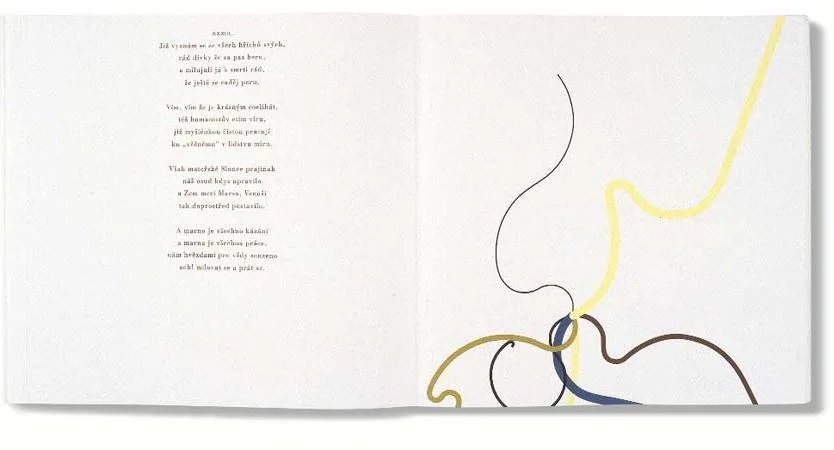
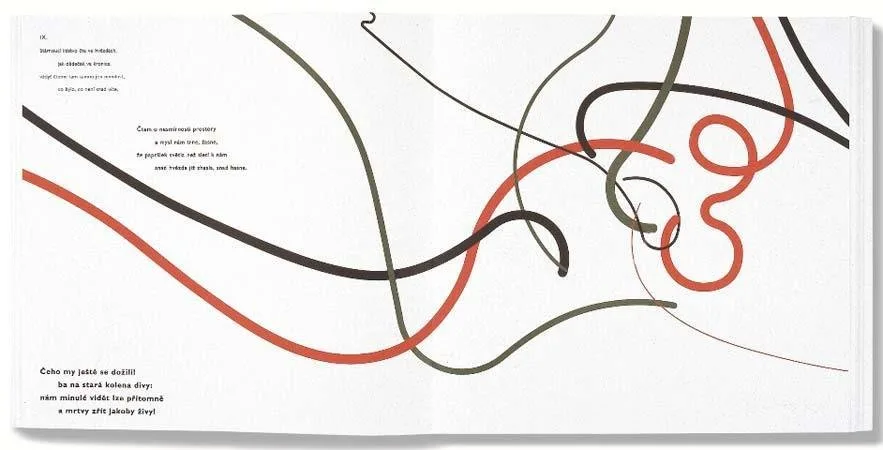
Two Czech author's books shaped the concept: Adéla Součková's Otázky, a playful dialogue between text and naive drawing — and Zdeněk Sýkora's generative structures woven into Neruda's Písně kosmické. The poems grew from years of sketchbook notes. The same sketchbooks later became the training data.
From random prompt
to my own hand.
In 2022/23, generative AI was at its dawn — no LoRAs, no one-click style transfers. Every round was tested on the same poem. Prompt, generate, judge, adjust: from generic stock-art to a model calibrated to my visual language.